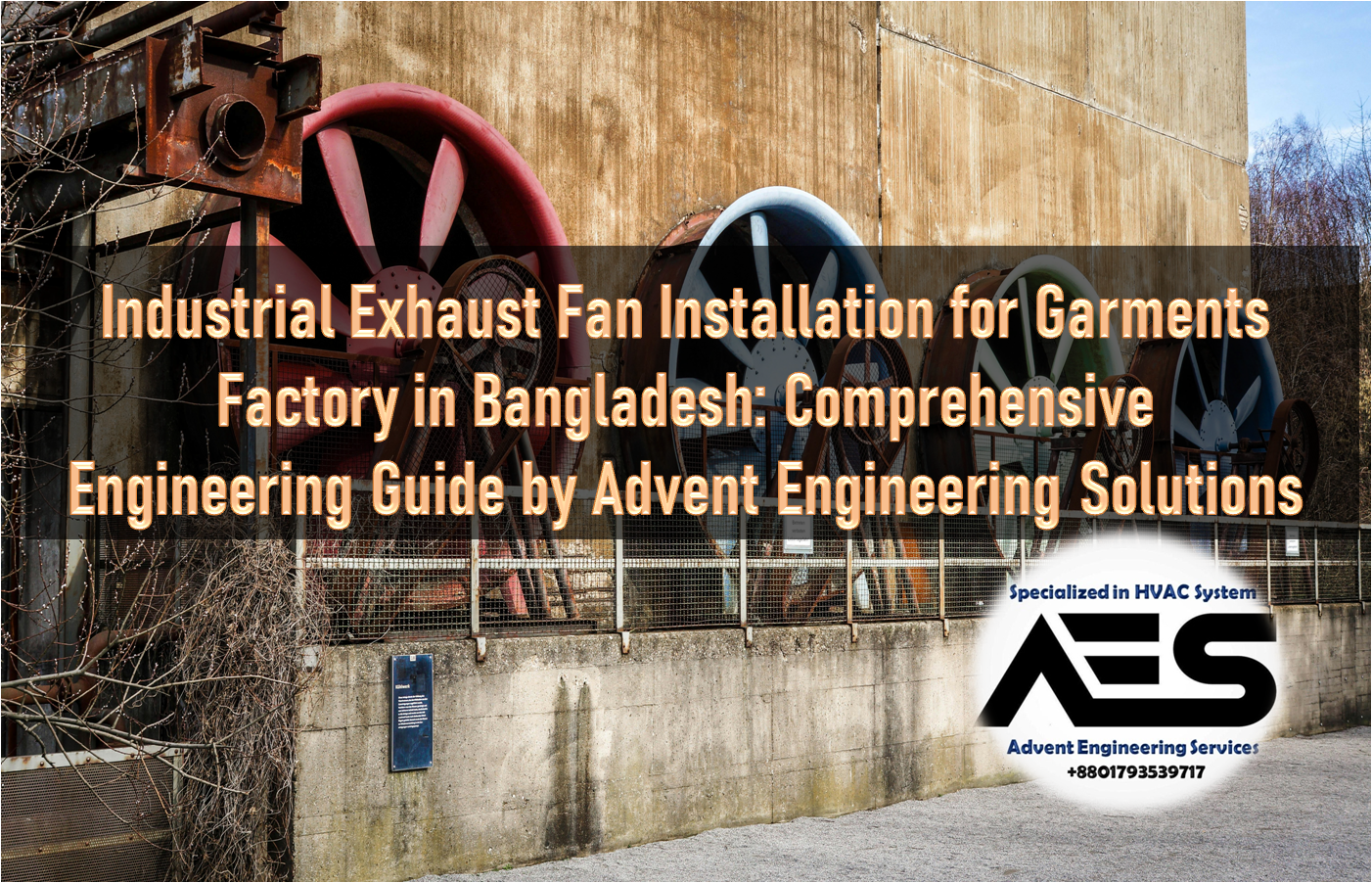
The readymade garments industry drives the financial engine of Bangladesh. Millions of laborers work inside these textile production units daily. High indoor temperatures, thick fabric lint, and heavy humidity plague these factories constantly. A lack of proper clean air setups reduces factory production rates drastically. Furthermore, bad air quality triggers chronic workplace respiratory diseases among floor operators. Factory owners must resolve these critical air problems to maintain workflow momentum.
Advent Engineering Solutions specializes in professional industrial exhaust fan installation for garments factory in Bangladesh. We build heavy-duty ventilation systems that pull hot air out instantly. Our setups lower operational temperatures and maintain steady fresh air intake cycles. This engineering guide explains our mechanical ventilation layouts, technical fan criteria, structural installation methods, and direct cost benefits. Explore our full engineering approach, operational benefits, and cost breakdowns below. Visit our official corporate website at https://advent.org.bd to secure an industrial property assessment today.
1. Challenges of Air Ventilation inside Garment Production Floors
Garment assembly lines run hundreds of sewing machines simultaneously. Every active machine motor creates significant heat emissions. Packed work environments trap body heat and elevate room temperatures rapidly. Without constant mechanical relief, air becomes stagnant and suffocating. This section breaks down the severe ventilation issues that challenge local garments facilities every day.
1.1 Extreme Heat and Humidity Dynamics in Bangladesh Factories
The tropical summer climate of Bangladesh pushes ambient outdoor temperatures past forty degrees Celsius. Metal roof factories transform into giant solar ovens during peak afternoon hours. High humidity levels block the natural cooling effect of human sweat. Consequently, operators experience heavy physical fatigue, dizziness, and sudden heat exhaustion. Maintaining stable operational performance requires active mechanical heat removal networks.
1.1.1 Impact of Thermal Discomfort on Sewing Machine Operators
Overheated sewing operators lose precise hand-eye coordination quickly. They stitch lines crookedly and ruin precious fabric panels. Production line errors increase by thirty percent when room temperatures cross thirty-two degrees. Workers require longer break periods, which slows down the entire delivery chain. Advent Engineering Solutions targets these hot zones to balance indoor thermal comfort levels smoothly.
1.1.2 Controlling Moisture Accumulation to Avoid Fabric Damage
High moisture levels damage stored raw fabrics and cardboard packaging panels. Moisture breeds hidden mold spores that stain white cotton apparel items permanently. Damp environments rust machine needles and expensive computer-guided embroidery units. Our industrial heavy fans extract moist indoor air continuously. This constant extraction prevents humidity from ruining your export-grade apparel stock.
1.2 The Hazard of Airborne Fabric Lint and Dust Particles
Cutting and sewing processes launch millions of tiny fabric fibers into the common air stream. Workers breathe these invisible floating lint particles continuously during long shifts. Over time, lint accumulation ruins sensitive mechanical parts and creates health risks. Passive window ventilation cannot clear these microscopic threats out of the workspace.
1.2.1 Respiratory Health Issues Among Textile Workers
Fine cotton dust settlement inside worker lungs causes severe industrial asthma and byssinosis. Sick operators miss work frequently, which destabilizes regular assembly line output. High worker turnover rates increase human resource training costs for factory management. Installing heavy axial exhaust fans pulls floating fibers out before workers inhale them. Clean workspaces preserve worker health and ensure continuous production.
1.2.2 Machinery Lifespan Reduction Due to Internal Dust Settlement
Thick fabric lint settles inside sewing motors and electronic controller boxes. The lint behaves like an insulation blanket that traps heat inside the circuit boards. This insulation causes frequent component burnouts and expensive machine downtime. Lubricated gears dry up prematurely when exposed to dry dust particles. Our exhaust systems clear the air path to keep your manufacturing machinery clean and cool.
2. Technical Specifications of Industrial Exhaust Fans for Textile Units
Industrial airflow machines require much stronger structural designs than standard commercial wall fans. They must run for twenty-four hours straight without any motor performance degradation. Advent Engineering Solutions sources certified heavy machinery to build these rugged setups. We analyze specific air performance metrics to match your factory building layout perfectly.
2.1 Understanding CFM Requirements and Air Changes Per Hour (ACH)
CFM means Cubic Feet per Minute, which measures raw moving air volume. ACH defines how many times the system swaps out old room air completely within sixty minutes. Garment factories require aggressive ACH rates to push out intense heat blocks. Standard commercial setups fail because they cannot move enough air mass.
2.1.1 Calculating Total CFM for Large Garment Floors
We calculate required airflow volume using a simple engineering formula: Multiply room length by width and ceiling height. Then, multiply that total volume by the target ACH rate. Garment floors require an ACH rate of twenty-five to thirty-five cycles. Dividing this ultimate total by individual fan capacity reveals the exact number of units needed. Advent Engineering Solutions uses this exact math to size your factory fans properly.
2.1.2 Selecting Between Axial Flow and Centrifugal Fan Models
Axial fans move massive air volumes directly across their blade axis. They work perfectly for open wall mountings across wide manufacturing areas. Centrifugal fans create intense pressure to push air through long, complex duct pathways. We look at your building structure to choose the best model type. Most open sewing floors benefit immensely from heavy-duty wall-mounted axial fan grids.
2.2 Material Build Quality: Galvanized Steel vs. Fiberglass Housings
The operational environment determines what kind of outer fan shell material you need. Heavy metal or advanced plastic frames provide different benefits based on your local factory conditions. We offer both options to meet specific durability demands. Choosing the correct material keeps your equipment running smoothly for over a decade.
2.2.1 Durability of Heavy-Gauge Galvanized Sheets
Galvanized steel sheets resist rust and handle heavy physical impacts easily. They survive tough industrial cleaning cycles and vibration stresses without cracking. These metal housings protect internal fan blades from high crosswinds on roof zones. They offer a very long operational lifespan for traditional factory buildings. We use premium zinc-coated sheets to ensure high corrosion resistance.
2.2.2 Corrosion Resistance of Fiberglass Reinforced Plastic (FRP)
FRP fans work perfectly in highly humid areas and chemical washing facilities. They never rust, even when exposed to direct rain or chemical vapor streams. FRP shells are lighter, which reduces the structural weight load on older building walls. This material makes your ventilation setup highly durable against chemical wear. We recommend FRP housings for specialized fabric dyeing and chemical treatment zones.
3. Strategic Benefits of Industrial Exhaust Fan Installation
Installing a professional exhaust system provides immediate upgrades across your entire business structure. It is a vital upgrade that improves both human work conditions and mechanical performance. Discover how professional installation transforms daily production. It turns high operational risks into predictable profits.
3.1 Maximizing Floor Operator Efficiency and Output
Cooler workers stay focused on their tasks for longer periods. They maintain high speed and make fewer mistake loops during afternoon shifts. Clean air prevents headaches and exhaustion, keeping operators energetic. Active fresh air movement creates an encouraging environment that elevates team morale. Your daily garment production targets become reliable and easy to achieve every single month.
3.2 Meeting Global Accord and Alliance Compliance Standards
International fashion brands inspect Bangladeshi factories for safety compliance before signing purchase orders. Poor air quality and high floor heat cause failed safety audits. Advent Engineering Solutions installs systems that meet global compliance standards. We optimize indoor air quality index (AQI) values across your production floors. Our setups help you win high-value apparel export contracts easily.
3.3 Minimizing Electrical Overhead with Natural Negative Pressure Layouts
Running giant industrial air conditioners across huge factory floors costs too much money. Exhaust fans create a natural negative pressure zone inside the building. This zone draws cool outdoor air inside through opposite windows automatically. You get effective large-scale cooling at a fraction of central AC running costs. This smart energy management slashes your factory monthly utility bills instantly.
4. The Step-by-Step Installation Process by Advent Engineering Solutions
A great fan performs poorly if technicians mount it incorrectly. Advent Engineering Solutions follows strict structural engineering rules on every project site. We plan each installation step carefully to ensure maximum safety and performance. Our systematic approach prevents structural damage and avoids production line downtime.
4.1 Comprehensive Site Assessment and Thermal Mapping
Our engineering team starts by visiting your factory floor in person. We map out the exact locations of heat sources, like iron presses and main machine groups. We look at existing window openings to map out natural air flow paths. This detailed mapping helps us find the best places to position your fans. Proper placement eliminates dead air zones across the entire production floor.
4.2 Structural Reinforcement and Wall Cutting Works
Heavy industrial fans cause continuous vibrations when running at full speed. We cut precise wall openings and install strong steel support frames into the building structure. These frames absorb machine vibrations and protect your factory walls from cracking. We add thick rubber vibration dampeners to keep operational noise levels low. We seal every edge to prevent rainwater leaks during heavy monsoons.
4.3 Electrical Control Panel Wiring and VFD Integration
We connect every exhaust fan to an industrial electrical control panel. Our team integrates Variable Frequency Drives (VFDs) to let you adjust fan speeds smoothly. You can run fans at lower speeds during winter mornings to save energy. VFD panels protect expensive fan motors from sudden power spikes. We use premium armored cables to prevent fire hazards inside your electrical system.
4.4 Air Velocity Testing and Airflow Balancing
We use digital anemometers to measure the actual air speed at every exit point. Our team checks the entire floor to make sure no hot air pockets remain trapped. We balance the intake and exhaust air volumes perfectly. This calibration guarantees an even, refreshing breeze across every sewing line. We hand over a fully tested and verified system to your facility management team.
5. Maintenance Guide for Long-Lasting Industrial Exhaust Fans
Regular care keeps your ventilation machines running at peak efficiency for years. Neglected fans accumulate thick dirt, which strains the motors and increases energy use. Follow this simple preventive checklist to protect your equipment investment. Regular maintenance keeps your system safe and highly efficient.
5.1 Monthly Cleaning Protocols for Fan Blades and Louvers
Thick fabric lint clings to fan blade edges over time. This buildup disrupts blade balance and causes loud rattling noises. Turn off the main power supply and wipe the blades clean every month. Clean the automatic shutter louvers so they can open and close completely without sticking. Removing lint keeps the motor running cool and prevents drag forces from wasting power.
5.2 Checking Belt Tension and Motor Lubrication Schedules
Loose drive belts slip constantly, which drops your total fan CFM output. Inspect belt tension every three months and tighten loose pulleys immediately. Cracked or worn belts should be replaced before they snap completely during operation. Apply high-temperature grease to the motor ball bearings once a year. Proper lubrication stops friction heat and prevents sudden motor burnouts.
6. Industrial Exhaust Fan Cost Breakdowns in Bangladesh
Your total investment depends on your factory floor size, fan body materials, and total motor power. Advent Engineering Solutions offers highly competitive pricing and honest quotes. Let us review the current average market costs for garment factory setups. We design setups to fit different facility sizes and budgets perfectly.
| Fan Size & Housing Type | Motor Power & CFM Output | Best Match For | Estimated Unit Price (BDT) |
| 36-Inch Galvanized Wall Fan | 0.55 kW / 18,000 CFM | Small Finishing & Ironing Zones | 22,000 – 32,000 |
| 48-Inch Galvanized Sheet Fan | 0.75 kW / 32,000 CFM | Medium Sewing Floor Lines | 35,000 – 48,000 |
| 56-Inch Heavy Industrial Fan | 1.10 kW / 44,000 CFM | Large Mega Production Floors | 50,000 – 70,000 |
| 50-Inch FRP Corrosion Fan | 1.10 kW / 38,000 CFM | Dyeing & Chemical Washing Units | 65,000 – 85,000 |
Note: The listed price ranges represent average equipment estimates. Final costs vary based on custom structural steel supports, cable lengths, and electrical panel options. Contact Advent Engineering Solutions directly to receive a detailed cost proposal tailored to your factory layout.
7. Why Choose Advent Engineering Solutions?
Advent Engineering Solutions is a premier industrial air engineering firm in Bangladesh. We bring years of field experience to every garment factory project. Our team focuses on delivering top-tier performance at honest, affordable prices. We prioritize client satisfaction through robust engineering and reliable equipment.
7.1 Experienced Team of Professional Mechanical Engineers
Our engineers understand the unique structural layouts of local garment buildings. We do not use generic guessing games to size your system. Instead, we use scientific math to design perfect ventilation layouts. We ensure your system complies fully with international factory safety codes. Our engineers manage the entire project from start to finish, keeping you stress-free.
7.2 Genuine Imported Components with Official Product Warranties
We source our industrial fan models from certified international manufacturers. Our fans feature pure copper motor windings and durable, heavy-gauge steel parts. We never use cheap imitation components on client project sites. We back every single installation project with an official company warranty. You receive fast, dependable support from our local service teams whenever you need assistance.
8. Frequently Asked Questions (FAQs)
Have more questions about factory exhaust setups? Read these clear answers to common questions from factory owners. Learn how to optimize airflow across your garments facility.
8.1 How many exhaust fans does a standard garment floor need?
The number of fans depends entirely on your total floor volume and total machine heat load. A typical ten-thousand-square-foot sewing floor usually requires six to eight large fifty-six-inch fans. This setup replaces old air every two minutes to keep the workspace cool. Our engineering team calculates your exact floor layout needs during our initial site visit.
8.2 Can exhaust fans run continuously during twenty-four-hour shifts?
Yes, our premium industrial fans are designed for continuous twenty-four-hour operation. They feature advanced cooling fins and heavy-duty bearings to handle non-stop workloads safely. Regular maintenance ensures they run smoothly without overheating during long shifts. We ensure your production line stays ventilated through every shift change.
8.3 Do these industrial ventilation setups protect against monsoon rains?
Yes, our wall exhaust fan setups feature automatic gravity shutter louvers. The shutters open wide when the fan runs and snap shut tightly when the motor stops. This design blocks heavy rain, outdoor dust, and birds from entering your factory floors. The system keeps your indoor air safe and dry throughout the entire monsoon season.
9. Conclusion
A premium industrial exhaust fan network is a vital investment for any garment factory in Bangladesh. It keeps your workers safe, cuts down machine breakdown rates, and secures global buyer approvals. Do not let summer heat slow down your production lines. Protecting your business requires professional engineering choices.
Advent Engineering Solutions provides the best industrial exhaust fan installation for garments factory in Bangladesh. We deliver top-tier engineering design, genuine imported machines, and reliable product warranties. Let us transform your hot garments floor into a cool, productive workspace. Our systems deliver maximum airflow with long-lasting mechanical durability.
Ready to upgrade your factory ventilation? Contact our expert engineering team today. Visit our official corporate website at https://advent.org.bd to request a free quote. Let us build a high-performance airflow system for your business.
Advent Engineering Services: The Best HVAC Solutions Provider in Dhaka Factory Operations
Advent Engineering Services provides affordable chiller plant service in Chittagong
Advent Engineering Services: The Best Affordable Commercial Ventilation System in Bangladesh